- Paul Schombs Bell of Arizona
CLICK to trace the ancestors of Paul Schombs If it does not take you to Paul, Return to this page and CLICK again - A Different Approach to Story Telling
- The story of Paul Schömbs is presented differently than the stories of the other emigrants. There were several reasons for doing so. First, Paul was a packrat. He kept many things from his life. When he passed away, his daughter Lee Bell Taylor became the custodian of these artifacts -- letters from Germany and his siblings who also emigrated, articles from the German press, photographs of his life (which was quite interesting) and even his spurs from the U.S. Calvary 100 years ago. Second, Paul emigrated a few years before World War I began. This was then followed by severe economic times in Germany during the 1920's, the Great Depression affecting the entire world, and finally by World War II. It is interesting reading peoples letters from these times. It is surprising there is so little mention of the global political events. Possibly this was because the siblings were on different sides of these events and wanted to talk about less controversial subjects. Or that their mail was being read by government agents. But there are numerous comments about how people were struggling in their businesses and lives.
Lee Bell Taylor's Foto Album 2020
CLICK to see the Foto Album
(Foto on right: Erika Schömbs Ludwig (*1920))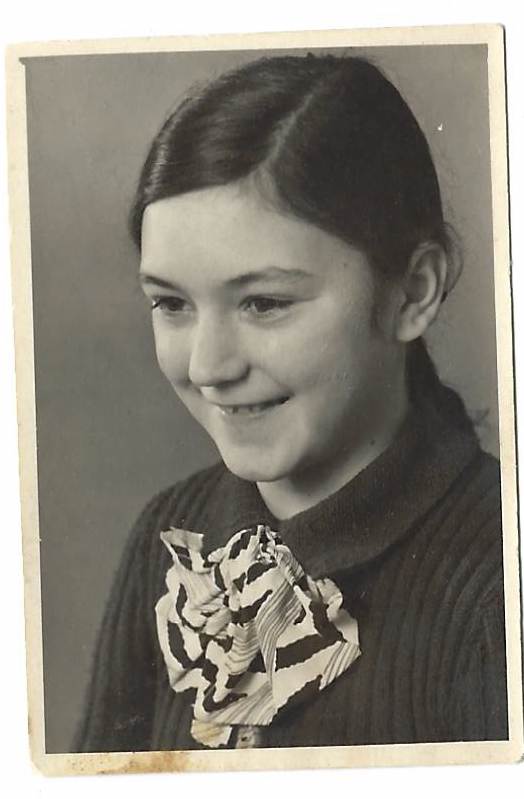
- The story of Paul is presented in two parts, both of which must be read. There is this webpage which gives an overview of his life with several photographs but does not get into much of the fascinating details. Those details and many documents are presented on a separate webpage entitled "Paul Schombs Timeline". Click on Timeline, which weaves in the Wars, Depression, parents and siblings.
- The Story of the Oppenheimer Schömbs Emigrants
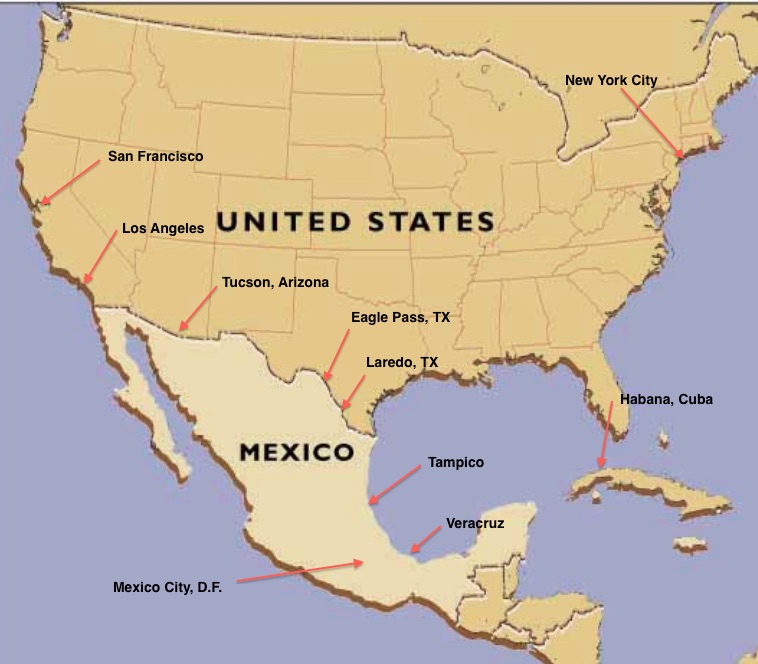
Mexico and the United States
Click the image to enlarge- Bernhard (*1862) and Katharina Bell Schömbs, residents of Oppenheim at the end of the 19th Century had five children, four sons and a daughter. Three of the children emigrated to the United States or Mexico. The stories are best read together to see how their lives intertwined: Paul (*1892), emigrant to the United States; Franz (*1897), emigrant to Mexico; and their sister Franziska or "Siska" (*1899), also an emigrant to Mexico.
The map on the right, when enlarged, can be helpful in following the stories of the three siblings. - Paul Schömbs (*1892 Oppenheim, +1981 Tucson AZ)
- Paul was born 16 March 1892 in Oppenheim, the second son of Bernhard (*1862) and Katharina Bell Schömbs. He was the first in the family to emigrate. Initially we found records of Paul in Arizona, then in Mexico and California. Later moving back to Arizona where he married and settled down. But it was not until we met Lee Bell Taylor, Paul's daughter and only child, that we began to understand what an interesting man Paul was.
- Candy Maker, U.S. Army Calvary
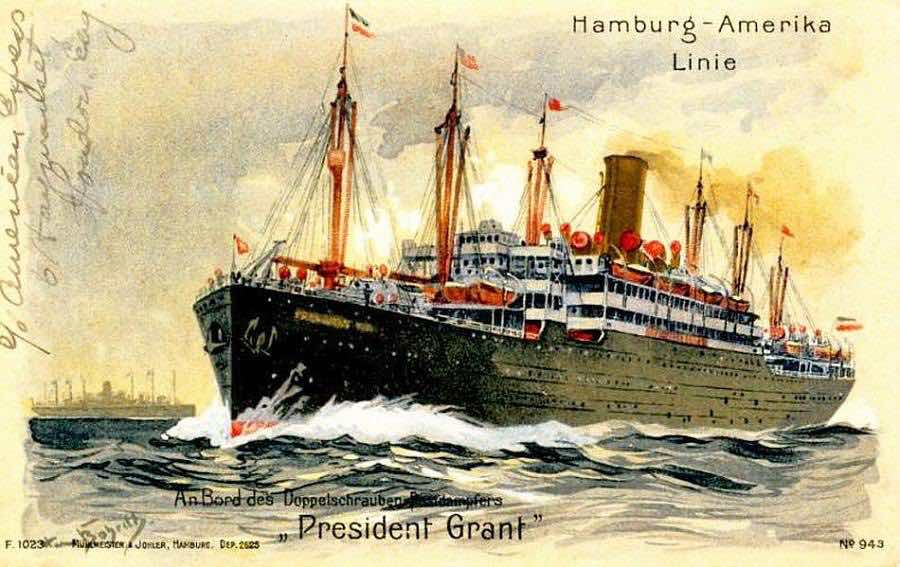
The President Grant
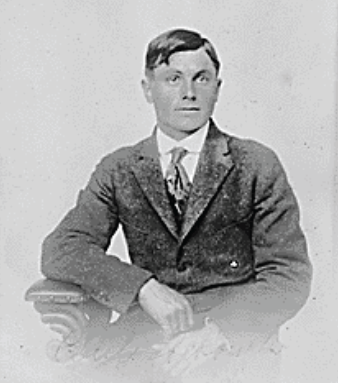
Click to enlargePaul Schömbs
Click to enlarge- There were two documents which originally gave us insight into Paul Schombs' early years in Amerika. The first was from 1917 when he registered for the Draft. From this we see that Paul was living in Amadoville, Arizona and working for the Montana Mines Company in Ruby. Ruby today is considered one of the best preserved ghost towns in Arizona, a glimpse into the history of the state. Amadoville's name was shortened to Amado in about 1920 and still exists today with a population of 3,000. It is located south of Tucson between Green Valley and Nogales near the Mexican border.
- Paul arrived in the United States on 19 April 1911, in New York on the ship President Grant. It was three years before World War I began and six years before the U.S. entered the War. He could have gone through the Naturalization process to become a U.S. citizen after five years, or in 1916. He does indicate that he had applied for Naturalization in Detroit, Michigan. But we now know that Paul had bypassed one of the proper immigration steps at the time -- being processed through Ellis Island. Paul and a friend jumped ship in the New York Harbor and swam to shore. [1] In Manhattan (New York City) Paul found work at a company making candy, but soon left New York for Detroit, Michigan.
Paul's stay in Detroit was also brief, a matter of days or weeks before he went to Ohio and on 22 December 1911 enlisted in the U.S. Army, Fifth Calvary. It was a three year commmitment. His family in Oppenheim raised and trained horses and Paul grew up being a horseback rider. The Calvary stationed Paul in Southern Arizona where Troop F was assigned to guarding the border with Mexico. His older brother Ludwig had joined the Hessisches Leibdragoner Regiment #24 (Hessian Calvary Regiment #24) in Germany earlier in 1911!
Were one to wonder how a German emigrant in 1914 ends up living in southern Arizona, the answer is undoubtedly that the U.S. Army made the decision for them. Southern Arizona at the time was definitely the Wild West. Amado, Arizona is about 80 miles (120 Km) west of Tombstone AZ. While Tombstone was at it's peak 20 or 30 years before Paul entered the area. little had changed. Wikipedia summarizes the history of Tombstone. - Paul arrived in the United States on 19 April 1911, in New York on the ship President Grant. It was three years before World War I began and six years before the U.S. entered the War. He could have gone through the Naturalization process to become a U.S. citizen after five years, or in 1916. He does indicate that he had applied for Naturalization in Detroit, Michigan. But we now know that Paul had bypassed one of the proper immigration steps at the time -- being processed through Ellis Island. Paul and a friend jumped ship in the New York Harbor and swam to shore. [1] In Manhattan (New York City) Paul found work at a company making candy, but soon left New York for Detroit, Michigan.
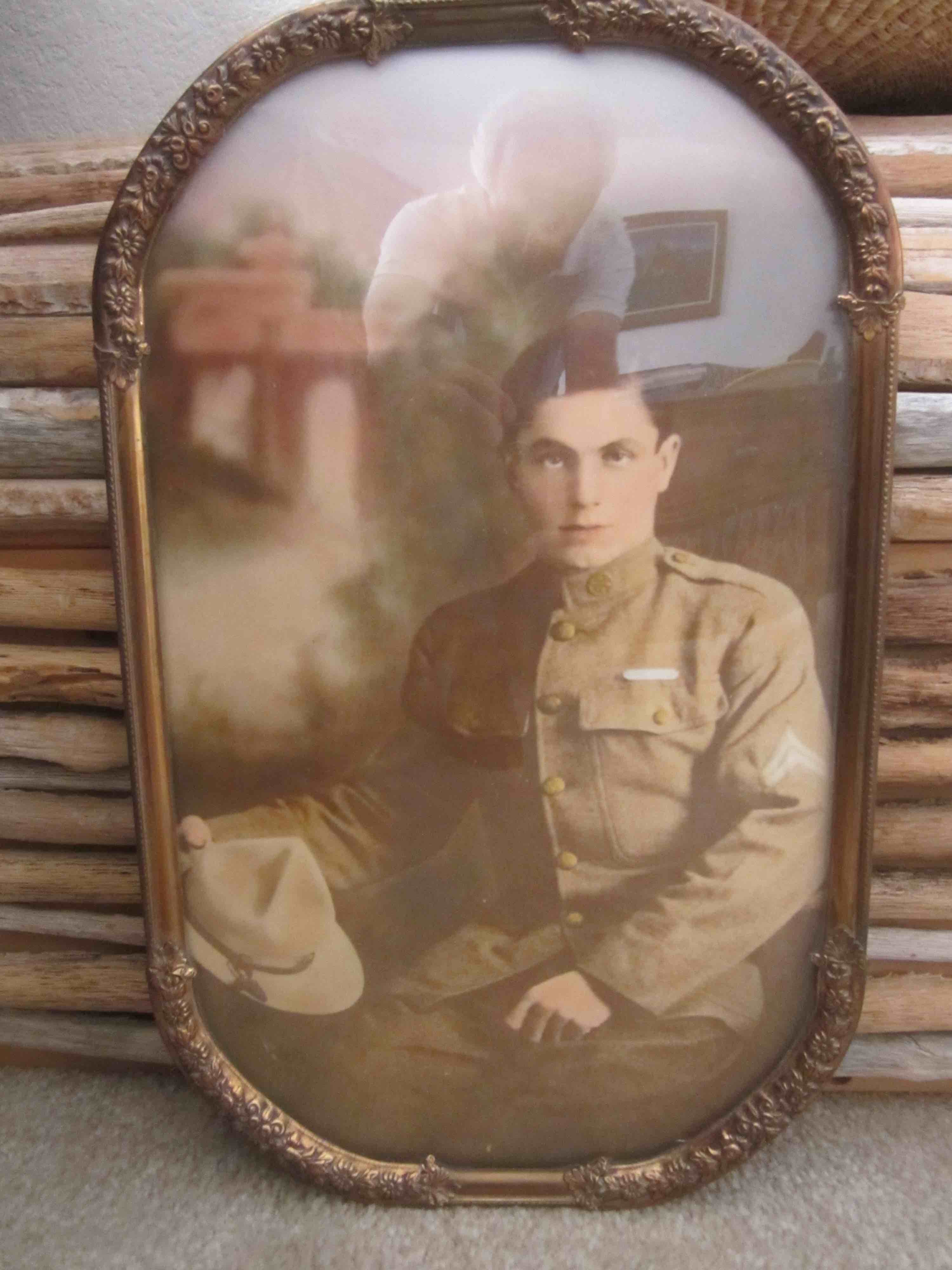
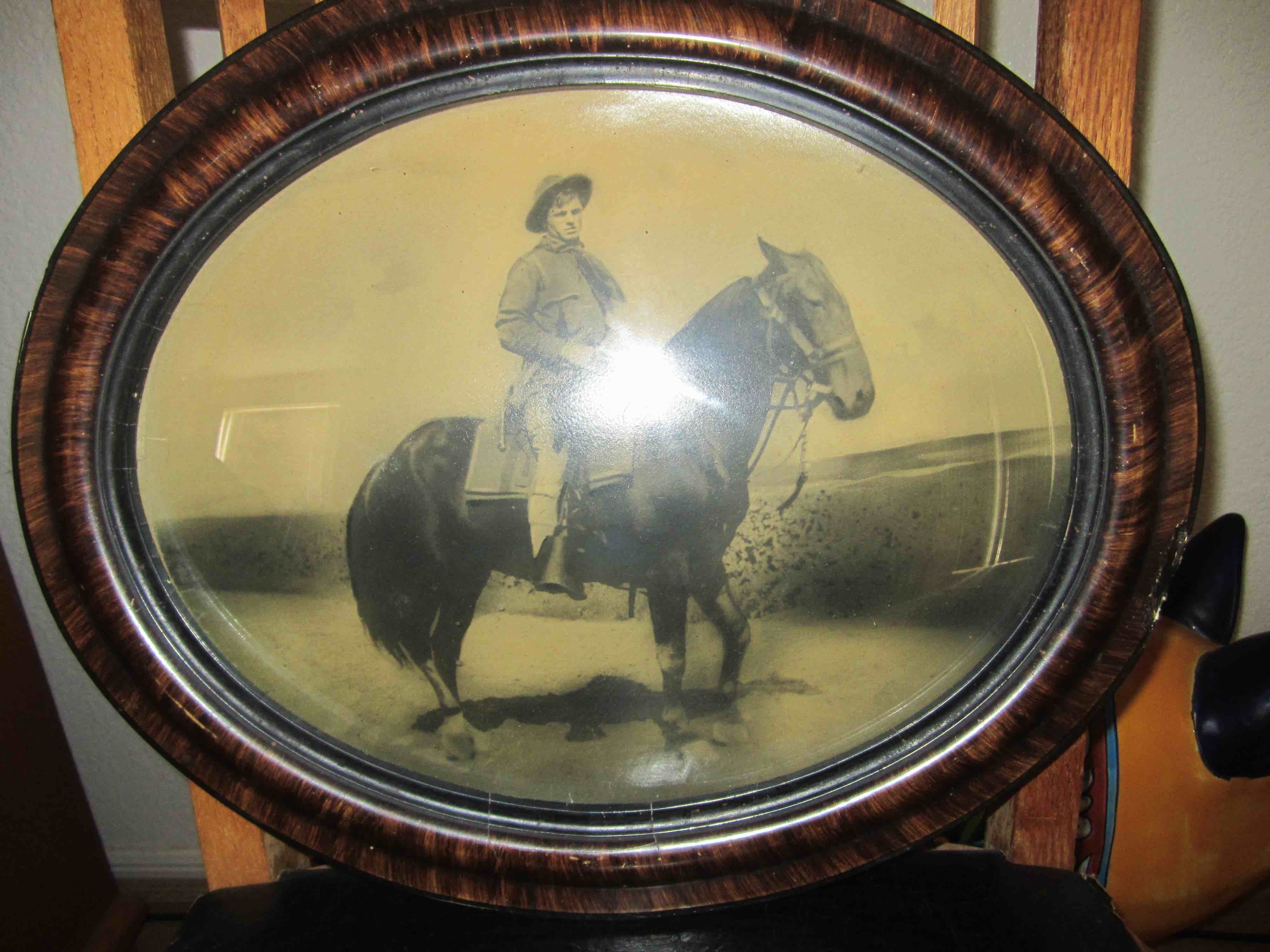
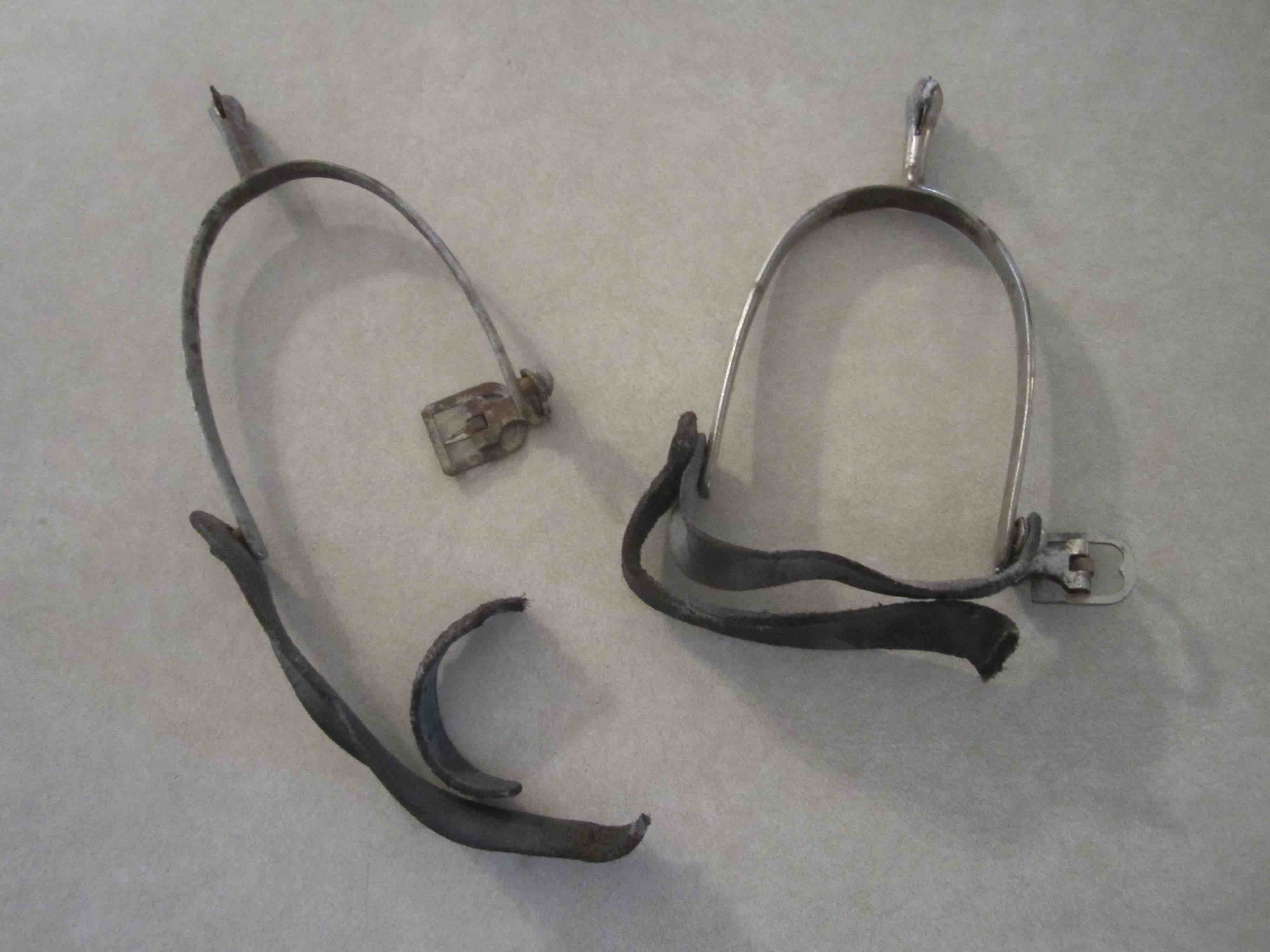
Paul in his Army Uniform
Click to enlargePaul on his Calvary Horse
Click to enlargePaul's Calvary Spurs from 1914
Click to enlarge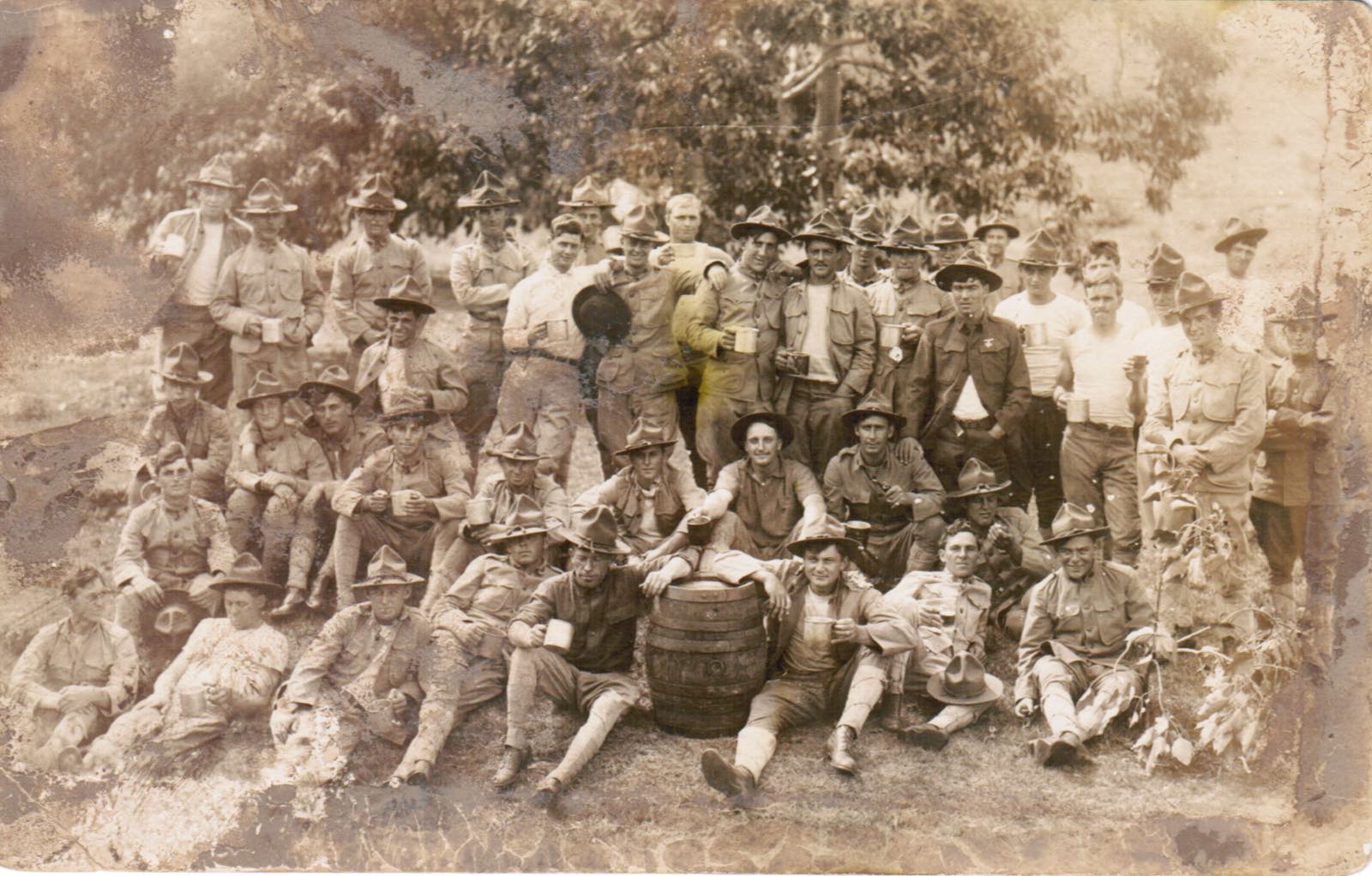
U.S. Army, 5th Calvary, Troop F, circa 1914
Paul Schombs is on the far left, sitting between the first and second rows looking straight at the camera and holding his hat in front of his legs. It is believed the photo was taken at Fort Huachuca AZ.
Definitely Click image to enlarge
- World War I
- World War I began in July 1914 when Austro-Hungary declared war on Serbia. Soon the War had brought in Germany on the side of Austro-Hungary and England, France and Russia against Germany and the Austrians. While the United States supplied armaments to those fighting the Germans, the U.S. did not actually enter the War until April 1917. In June 1917 Paul, age 25 at the time, was required to register for the Draft. Two months later Paul received an exemption from the Draft. In the next section it becomes clear why he was exempted.
- Affadavit of Alien Enemy
- In 1918 Paul was required to complete a detailed "Affadavit of Alien Enemy". The United States had recently entered World War I. All those living in the United States who were citizens of Germany and it's partners in the War were required to complete the Affadavit. Paul Schombs' Affidavit was completed 5 February 1918 in Amadoville.
The four pages of Paul's Registration gave us his story from late 1914 until February, 1918. - On the first page Paul accounted for his employment since the beginning of 1914:
-
- until 20 December 1914, Private and Corporal in the U.S. Army. In a later part of the Registration he indicates that he was in the U.S. Calvary, F Troop, for three years.
- January 1915, a mechanic helper at Carus Brothers, Nogales, AZ
- May to Aug 1916, groundman, Mountain States Telephone Co. between Tucson and Benson, AZ
- Aug 1916 to Jan 1917, truck driver, Nogales Bakery, Nogales AZ
- Feb 1917 to Jul 1917, auto driver, Montana Mines Company, Amadoville / Ruby, AZ
- The Montana Mine in Arizona had a long and varied history. To learn more read its story. It gives an interesting account of the time.
- While all of the time from 1914 to 1918 is not covered by his employment, he indicated he had also lived in Los Angeles and El Monte, California during the period. In February, 1918 he gave his residence as the Sopri Ranch in Amadoville, Arizona. Today the Ranch name is often spelled Sopori.
Paul was not a large man. He gave his height as 5'6" and weight as 145 pounds. He had dark brown hair.
A section of the Affidavit on page 2 requires the registrant to identify any family members "in arms for or against the United States and its allies." Paul names his three brothers, "Louis, Frank, and Bernhardt" and indicates they are all "against" the United States in the War (World War I). Certainly this could have earned Paul an exemption from service. - Paul (Schömbs) Schombs becomes Paul Bell
- For several years we knew little about Paul Schombs after 1918. There was documentation of two trips returning from Mexico in 1921. The first was in March and the second May. Whether these were work related was not known. Also whether there were two trips or just one was not clear. Both the returns were on the second day of a month starting with "M". Perhaps there was an error in transcribing the document. But the two had different "Record Identifier" numbers.
Then we found additional documents regarding Paul. Three weeks after his May return from Mexico, on 23 May 1921 Paul became a Naturalized Citizen of the United States in Tucson, Arizona. Three days after that he applied for a U.S. passport in Nogales, Arizona. Nogales is south of Tucson on the Mexican border. The passport was issued on 2 June 1921.
The reason we had had problems tracking Paul after 1921 turns out to be twofold. The first was the changing of his name from Schombs to "Bell", the maiden name of his mother. Actually the change of name can be seen in his passport application where he declares "I, Paul Bell, formerly Paul Schombs, a Naturalized and Loyal Citizen of the United States, ...."
In the application Paul indicates his intention to go to Mexico through the Texas town of Eagle Pass. His destination is given as Tampico on the "S.P. de M.R.R.". This indicates his plan to go on the Southern Pacific Railroad to Eagle Pass, then the Mexican Railroad to Tampico. As seen on the map above, Tampico is on the Gulf Coast of Mexico. - Paul Schombs Bell Returns to Germany
- The second reason was not learned until after we were able to see his U.S. passport with its various stamps. Once Paul received his passport, he entered Mexico and went to Tampico in July 1921. Mexican records are not nearly as plentiful and available online as they are in the United States. After about six months in Tampico Paul had his passport amended by the American Consulate General in Mexico City, adding Great Britain, France, Germany and several other European countries. In March 1922 his passport was stamped in Mexico City with a Visa to enter Germany. The Visa was valid for entry into Germany for ninety days or until 25 July 1922. He probably went to Germany in June 1922. For he arrived in Oppenheim, Germany (his hometown) on 23 June 1922. The Timeline gives more details on his trip. Paul, who had been away for eleven years, spent three and a half months in Oppenheim. He embarked on his return voyage from Hamburg to Mexico on 11 October 1922.
- But First, Why Tampico?
- The timing of Paul's interest in Mexico as well as his initial destination is telling. Mexico, beginning in about 1910, was in a state of continuous civil unrest, rebellion and ultimately civil war. The hostilities consumed the entire decade ending in 1920. Wikipedia's story of the Revolution is interesting. While the hostilities were going on, discoveries of significant oil reserves were also taking place. In 1911 the first petroleum exports from Mexico occurred. And from the city of Tampico on the Gulf coast. From 1917 the volume of exports grew rapidly and reached historic high levels during the period of 1921-1925. Again, Wikipedia is helpful. Paul and his brother Franz both undoubtedly went to Tampico to participate in the oil boom and the economic opportunities it brought. In fact again looking at the passport application, he indicated the object of the visit was to "Look into business opportunities".
After discovering the emigrations of Paul and his sister Franziska, we then found the record of their brother Franz (*1897) living in Mexico. In 1924 Franz was married in the city of Tampico. Franz and his wife Rosa lived in Tampico for a number of years where Franz worked in the oil industry.
During his first three years in Mexico Paul was also employed in the oil industry as a driver and mechanic. His employers were very complimentary of Paul's work, as seen in their letters of recommendation, which are in the TimeLine. This had been his background after 1914 for several years in Arizona. We have three of his pictures. We are not sure if Paul is in any of them but they were his pictures. The year is also not known but, based upon the vintage of the trucks, the pictures were from the 1920s. With all the growth taking place in Tampico, trucking would have been very active. 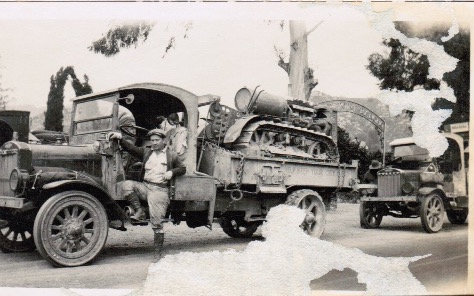
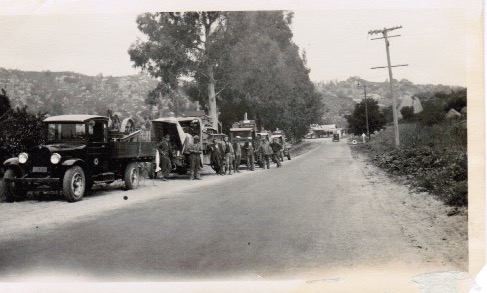
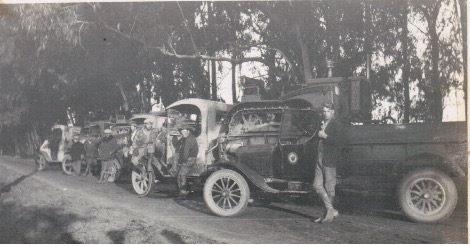
Truck A
Click to enlargeTruck B
Click to enlargeTruck C
Click to enlarge- Paul Bell -- Aviator, Inventor
- Paul developed a passion for airplanes. In the latter months of 1924 Paul went to Chicago to take flying lessions. When he completed his training he may have purchased a Heath Airplane kit, assembling it himself and then returning to Mexico with his airplane. Whether with his own plane or not, his return to Mexico was in early 1925.
During this period Paul also showed his inventor talents. He filed for at least one patent, which was issued in the United States in 1927. It also was issued in Canada. It was a device for catching small animals. Given where Paul had been living, it was particularly adapted to snaring and holding poisonous snakes.
- Marriage in Mexico City, 1925
- Paul's sister Franziska "Siska" had emigrated from Germany to Mexico City in 1923. Clearly she was influenced by Paul's stay in Oppenheim the prior year. She was married in Mexico City in 1924. This led us (before we had met Lee Bell and received Paul's personal collection) to search for Paul Schombs in Mexico. We were successful. In 1925 Paul married Esther Muñoz (*1894) in Mexico City. It undoubtedly holds much more information but must await assistance from a bi-lingual friend and requires access to Ancestry.com. Spanish practice is that a male takes the family names of both his father and mother. Hence, Paul is documented in the marriage as "Paul Schombs Bell". However, in all other cases for the remainder of his life Paul simply uses the name Paul Bell. Sorry Dad.
In 1925 and 1926 Paul was active in flying his plane and building up his business. This can be seen from a part of his Flight Log which is available in the Timeline. - Plane Crash, End of the Marriage, the Return to the United States
- There are records of two crossings into the United States by Esther Muñoz Schombs. They are interesting for several reasons. First, Paul Schombs is not with her. Second, she was a widow from a former marriage and had a son with her first husband, Theodoro Schumacher. Schumacher was obviously another German emigrant or the son thereof.
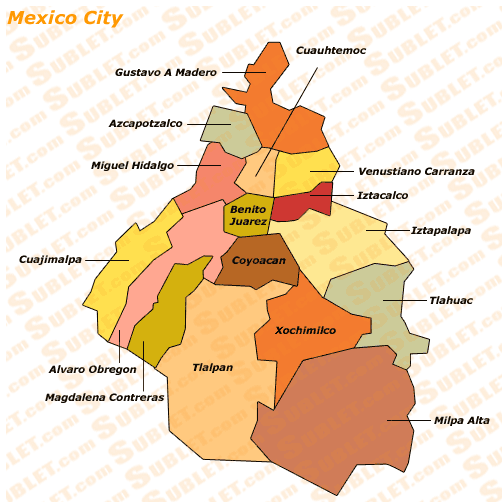
Mexico City Boroughs
Click to enlarge- In another document we have learned of a daughter Esperanza (*1912, 22.08.1994 Cuauhtemoc D.F.), the child of Esther and Theodor Schumacher. Esperanza lived a long life, dying in Mexico City in 1994. Esperanza was the widow of Luis Zendejas.
In 1926, the year after Paul and Esther were married, Esther entered the United States through El Paso, Texas. She was born in Mexico. Later we will see her birthplace was Cuernavaca in the state of Morelos, about 100 Km south of Mexico City. Traveling with Esther was her son Teodor Schumacher (*14.04.1913 Mexico City). Her "Departure Contact" is Paul Bell.
In 1925 and 1926 Paul was building his business - an aviation service in Mexico City. One of his business lines was flying over the City or major events dropping advertising leaflets. In October 1926 disaster struck. Paul was flying his plane when the plane crashed on takeoff. The newspaper article indicates the plane was owned by Paul. His business partner, J. Block, died in the crash. Paul decided that he would not continue piloting and did not fly again. He did apparently build another plane from a kit a few years later in California, but his daughter Lee said he did not fly it.[3]
By 1927 or certainly 1928 the marriage of Paul and Esther was unraveling. Paul's daughter Lee offers the story told to her by Paul later in life that Esther divorced him because he was infertile. She wanted more children. Then Lee offers herself as proof that Esther was wrong.[4]
Sometime in late 1927 or early 1928 Paul returned to the United States, going to Pasadena, California. In September of 1929 Paul purchased a lot (homesite) in a new residential development in the town of San Luis Obispo, a town about 200 miles (300 Km) north of Los Angeles near the Pacific Coast. Paul began his monthly payments of $7.50 plus interest. The interest brought the monthly total to about $8.50.
The New York Stock Market crashed in October 1929, ending the Roaring Twenties and leading to The Great Depression. Paul continued making his monthly payments for the San Luis Obispo property and paid off the Note in 1934.
A month after purchasing the San Luis Obispo lot, a friend of Paul's (J.M. Orosco) wrote. There was a opportunity to homestead a specific parcel of land in Santa Cruz County, Arizona, the area where Paul had lived and worked before going to Mexico. Orosco assured Paul it was the opportunity of a lifetime. Paul made application with the U.S. Department of Interior to homestead. The application was accepted. - In the 1930 U.S. Census Paul Bell is living in Pasadena (Los Angeles), California. He is divorced, living at 106 Winston Road (paying rent of $25 per month) and working as a "street sweeper operator" for the City. In several other documents Paul's military service is mentioned. In the 1930 Census it appears that it was initially entered as "yes", then erased and replaced by "no". He had been in the military service but just not in World War I.
Paul left California in April 1930 and returned to Santa Cruz County AZ to homestead his new land. In addition to working on the land, Paul began to spend much of his time wildcatting a mining claim he had filed. With little income and as the Great Depression became more severe, Paul experienced financial problems. This can be seen in various documents in the Timeline from that period. Perhaps he asked his brother Franz, his closest sibling, for financial help. Regardless, there are several letters from Franz apoligizing for not being able to help Paul due to Franz's other investments and commitments. By the mid-1930s Paul's financial condition had improved somewhat.
In August 1931 Paul was appointed a School Trustee (School Board member?) for School District 49 in the County of Pima AZ, which abutted Santa Cruz County. For this appointment Paul had to swear to support the Constitution of the United States and to defend it against all enemies. But a few years later in 1933, Paul is back in Mexico. He was there for at least several months based upon a letter he received from his friend Rudolph Bachman, a farmer in Amado AZ. Paul had had difficulty getting his divorce from Esther finalized. Perhaps this was the reason for his 1933 trip. - Paul Bell Remarries, Instant Family, Miner
- On 9 January 1936 Paul and Irene Pauline Minderman Hackett (*29.06.1906 AZ, +8.05.1970 Oracle AZ) were married in Nogales AZ by a justice of the peace. Irene too had been previously married and brought her three children into the marriage with Paul: Alice (*1929), James (*1930) and Edward (*1934). Irene's first husband Clarence "Sarg" Hackett (*1892, +23.01.1934 Oracle AZ) had died in 1934. He was buried in the Evergreen Memorial Park in Tucson, Arizona.
Following Paul and Irene's marriage they rented an old ranch house from Howell Manning, a local rancher, near Paul's homesteaded land. In September 1936 Paul and Irene were the proud parents of a daughter, Lee. There were now six family members.
In February 1937 Paul traded the land that he homesteaded on the north side of Arivaca Road to Howell Manning. Paul received 28 acres on the south side of Arivaca Road which had a small two room house (note: that is rooms, not bedrooms). Temporarily the Bell's lived in Kinsley's station while Paul made improvements to the house. The six of them lived in the two rooms -- a large bedroom and a kitchen. Over the ensuing years Paul enlarged the house, adding living and dining rooms and new kitchen using adobe bricks which he made. The location was about five miles west of Amado, or 9 miles north of Tubac.
In February 1938 Paul and Irene purchased a lot in the Government Heights Subdivision in Tucson, thirty miles (50 Km) to the north of their ranch near Amado. It is believed this was for investment purposes.[7]
In September 1939 World War II commenced with Germany's invasion of Poland. With the exception of a letter from Franz in December 1939, the letters from his brothers seem to have stopped during the War. Paul was again required to register for the Draft but, at age 50, he was not called to serve. The letters from his brothers re-commenced after the War. During the War Paul was working in the copper mines, particularly for the Eagle-Picher Company. His wage for many years was $.9075 per hour. He would stay in crew tents at the Sahuarita Mine. Irene would drive to the mine to bring him home for weekends. She drove the school bus and would take him to the mine early Monday in order to be back for the Monday morning bus run. Paul had also driven the school bus, as reported in the Arizona Daily Star in 1938.
The 1940 Census asked several questions of interest. Paul is enumerated as owning their home with a value of $300. A few neighbors are listed with homes of $3000-4000 value. Paul reported his occupation as a school bus driver with an income of $720 during the prior year, higher than some of his neighbors but the information was apparently voluntary as some of the "cattle ranch managers" did not report income. Both Paul and Irene are recorded as having completed 8 years of schooling. In 1935 Irene and her children from her first marriage had been living in Oracle, Arizona, a town about 40 miles (60 Km) north of Tucson and 75 miles north of Amado.
As seen in his Draft registration in 1942, he was working at the Mary G. Mine in the Cerro Colorado Mining District of Santa Cruz County (Sahuarita AZ). The Mary G. was about twenty miles southwest from their home.[6]
Parts of their lives from the mid-1930s until the early 1950's have been documented by Paul and Irene's daughter Lee. A Link to Lee's narrative is included below. Here are a few of the highlights:
-
- My Dad cleared about five acres so we could have a vegetable garden. He then hand-dug a well for water for the garden. It was about four feet across and then he built a rock retaining wall about 6 feet down to where the well casing started. The well was probably 20 to 25 feet down. You could see the water from the top.
- My dad drove the school bus until I was old enough to go to school. Then my mother became the bus driver (and my dad went to work in the mine). The "bus" was their old station wagon and they had wood benches for the kids to sit on, on each side and down the middle of the back. There were no windows in the back. It was probably considered a panel wagon. It was their own car and the County provided them with gas and tires, plus Mama's salary.
- My Dad would go and stay in a tent at the Sahuarita mine and just come back on weekends.
- I remember the cars we had used to rattle so much you'd think they were going to lose parts, and probably did.
- We had chickens and a cow named Bossy, which only my mother could milk. When Daddy tried to milk her, she would kick over the bucket and spill the milk.
- We didn't go to doctors, we couldn't afford them probably and it was too far to go anyway.
- My mother would be Santa Claus at Christmas and I remember her dressing up like a black man -- Amos or Andy from the radio show. She would wear a bowler hat and make her face black with a burnt cork and wear a man's suit.
- My parents sold tickets for the dances at the Halfway Station, a bar and restaurant. The Halfway usually had Mexican bands and mostly Mexicans went to the dances. Not too many whites went, we were some of the few. I guess that's where I learned to dance.
- At grade school most of the kids were Mexican. It helped me learn Spanish, although we were not supposed to speak it at school.
Paul's interests after World War II were particularly related to mining. He filed several claims for new mines. And organized partnerships to support the commercialization of the mining properties. He also worked as an auto mechanic as well as bartender at Kinsley Ranch (now the Cow Palace), a favorite watering hole in the area. 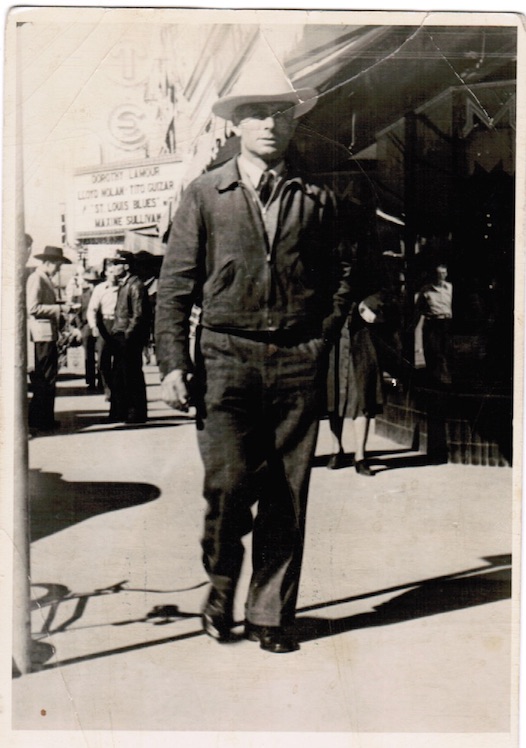
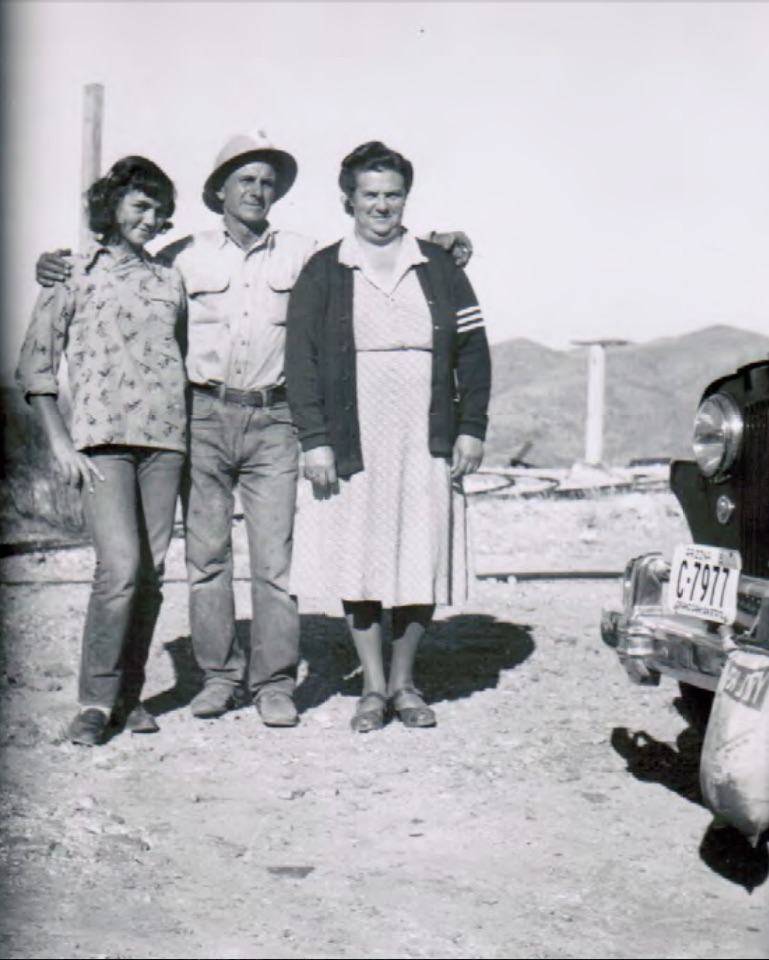
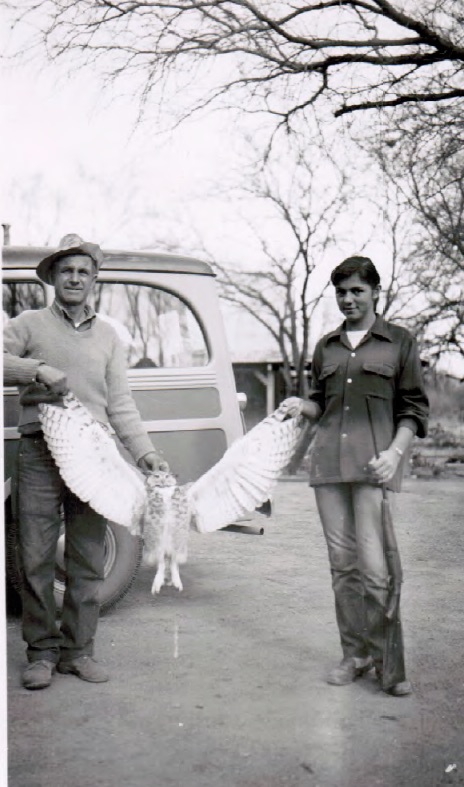
Paul Bell, circa 1950
Click to enlargeLee, Paul, Irene, circa 1951
Click to enlargePaul and Lee with an owl which had been killing the chickens
Click to enlarge- In the early 1960s, after their daughter Lee was out of school and had left the house, Irene and Paul opened a bar in their home -- "Bells Bar". It was frequented by the occasional friend or hunter passing through the area. Irene maintained a visitors log which people had to sign. They closed the Bar when Irene became sick in 1968. She passed away on 8 May 1970 in a Tucson hospital. Paul continued to live on their ranch until 1972.
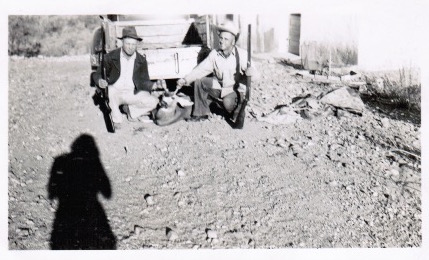
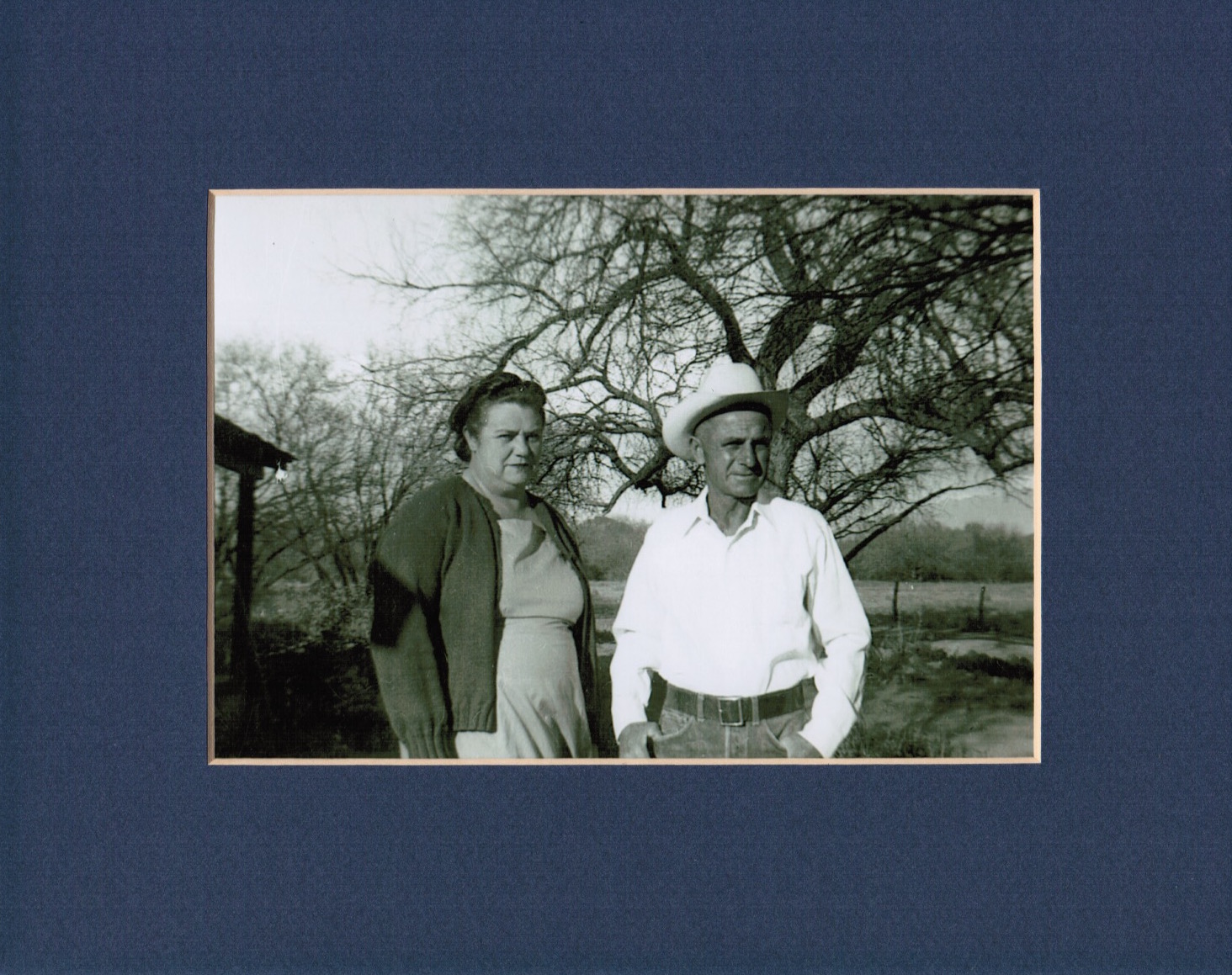
Lester Fernstrom (friend from Arivaca) and Paul
after a successful hunt
Click to enlargePaul and Irene, circa 1954
Click to enlarge- After Paul sold the property he moved to first San Manuel AZ and then Oracle AZ, living with daughter Lee and her family. As his health began to fail, he went into the Veterans Administration Hospital in Tucson, then a nursing home in Green Valley where he had many friends in the area. In 1981 he returned to the V.A. Hospital where he died.
- Sibling Visits to Arizona
- On three occasions Paul's siblings came from Mexico City to visit him in Arizona:
-
- 1949 -- Franz visited Paul and his family in Arizona. At the time Irene was sick. She and Lee had gone to live temporarily in Oracle with Irene's parents. Paul brought Franz to Oracle to meet them.
- 1957 -- A letter from Ludwig to Paul in October 1957 mentions a visit of Franz and Siska to Amado.
- 1972 -- Franz, Rosa and Ziska came to Arizona to visit Paul. This was two years after the death of Irene while Paul was still living on the ranch west of Amado. While there Paul brought them to Scottsdale, where Lee Bell and her husband Skip Taylor were living at the time with their children.
- 1978 -- After the death of Franz and when Paul's health was beginning to fail, Rosa and Ziska visited Paul in Oracle. At the time Paul was living with Lee and Skip Taylor and their four children.
- The Deaths of Irene and Paul Bell
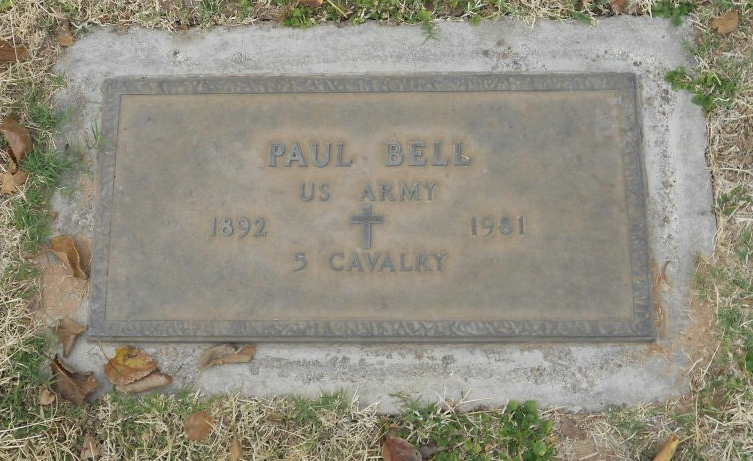
- Irene passed away on 12 April 1970 and was buried in the Evergreen Memorial Cemetery in Tucson. Paul died eleven years later in October, 1981. He had been living in Oracle. He too was buried in Evergreen Memorial.
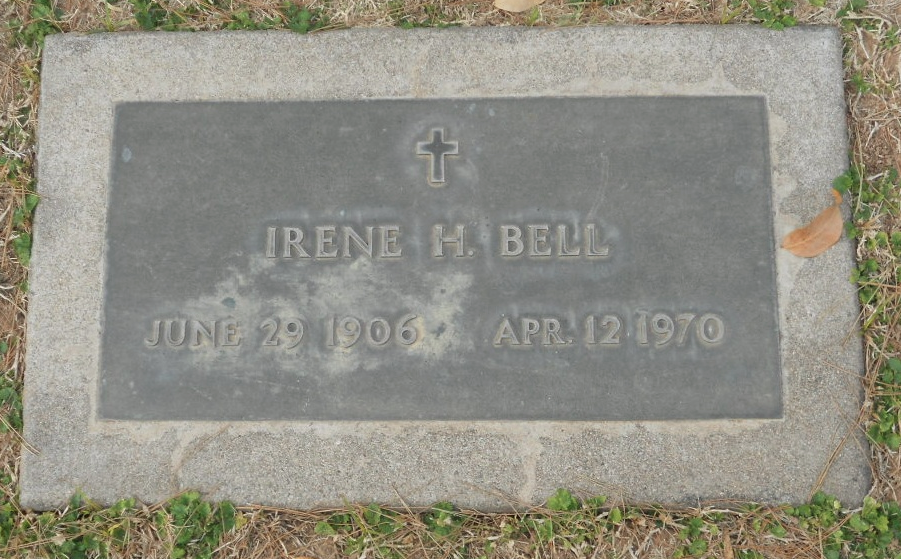
Irene Bell Gravestone
Click to enlargePaul Bell Gravestone
Click to enlarge
- Family Research Made Fun
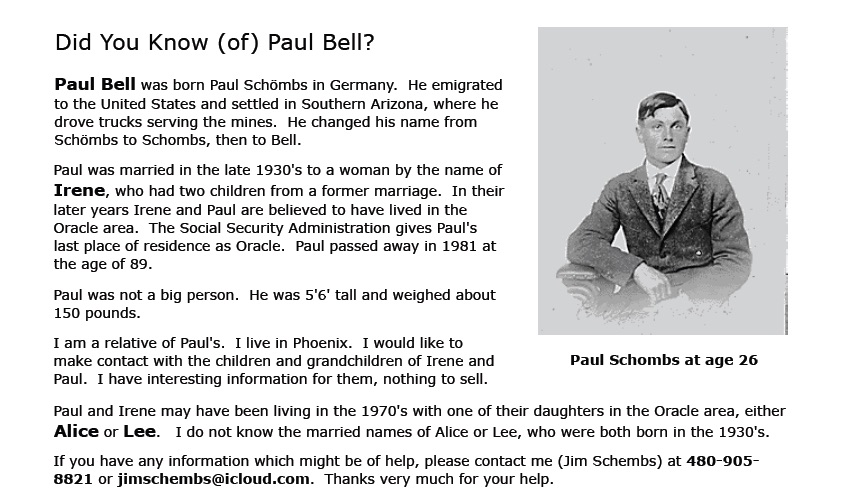
"WANTED - PAUL BELL"
Click to enlarge
- As previously mentioned, the search for Paul Schömbs Bell took several steps over many years and the collaboration of several family members in Deutschland and Amerika. I (Jim Schembs) thought the last would be simple. Knowing that Paul Bell was buried at the Evergreen Memorial Cemetery in Tucson and that his last place of residence had been Oracle AZ, I ventured down to both. Unfortunately Arizona has laws keeping cemetery records confidential, e.g. who provided the information for Paul Bell, hence this did not help. The lady at the Cemetery was very pleasant but nothing more. But Oracle is a very small town north of Tucson. Some old-time resident of Oracle would surely have known of Paul Bell or his daughter Lee, age about 80 years. My visit to Oracle produced some people interested in what I was doing but no knowledge of an 80 year old female with the first name Lee. The "Wanted Poster" to the left was posted in the Oracle Post Office, churches, Historical Society, Community Center and a few other logical places. It did not say "Wanted, Dead or Alive" as I already knew his state. But posted on the Post Office bulletin board it had the same effect.
I had also found addresses for a James Hackett and an Edward Hackett, residents of Tucson. I mailed both of them the Poster. James Hackett emailed back, saying he knew nothing of a Paul Bell. Edward Hackett turned out to be the step-grandson of Paul and step-brother of Lee Bell Taylor. He forwarded my letter to Lee who called me. Success! Lee and I have talked several times, met four times and will talk more. She has been very helpful in filling in many parts of the story and providing most of the documents included in the Timeline as well as the photographs of the living. - Descendants of Paul Schömbs Bell
- Children: (1)
- 1.1.....Lee Irene Bell (*1936 Tucson AZ)
- Lee was born in the "Stork's Nest", the affectionate name for the primary maternity hospital in Tucson AZ years back. The newspaper made a misprint, reporting that Lee was 7 ounces at birth (rather than 9 lb, 7 oz). The hospital received several calls. The Narrative of her upbringing is interesting to read. Lee wrote it so her descendants could see how life was in earlier times. The narrative also includes the relatives on Irene's side of the family.
-
- I don't remember having many toys. I remember dolls but only after I was a little older. When I was 8 I believe the folks must have been doing better financially. I got my old toy box, a teddy bear, a doll cradle and a doll.
- When I started school I was almost five years old. My mom was driving the bus and I guess I said I wanted to go to school. Mrs. Eulalia Bourne (Sister Bourne) was the teacher that year and she said it was okay with her. I guess I did okay, as at the end of the year I went on to the second grade.
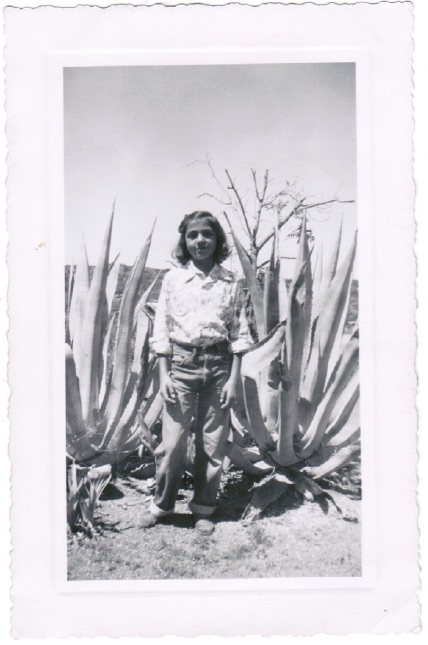
- I went all eight years to Sopori School. I used to wear Levis. In those days girls usually didn't wear pants. But I think I had them because I was always a Tom Boy and skinned my knees a lot.
- We used to play dodge ball, tops and had a running baseball game, from first recess thru lunch and last recess.
- When I graduated from the 8th grade, there were only four of us, all girls. We thought we were such big shots.
- When I started high school I was scared to death. I was very shy.
- At graduation I remember looking at my certificate to make sure it was not blank. If it hadn't been for my Spanish teacher liking me, I may not have graduated. I was terrible in school because I didn't apply myself and didn't study very well or enough.
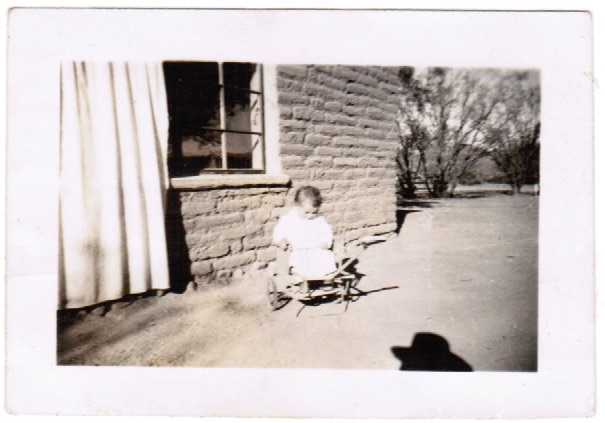
Lee outside house, circa 1937
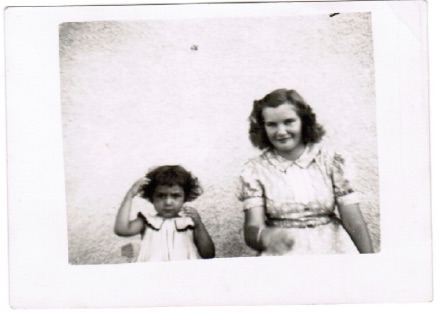
Click to enlargeLee and (half) sister Alice, circa 1938
Click to enlargeLee, circa 1946
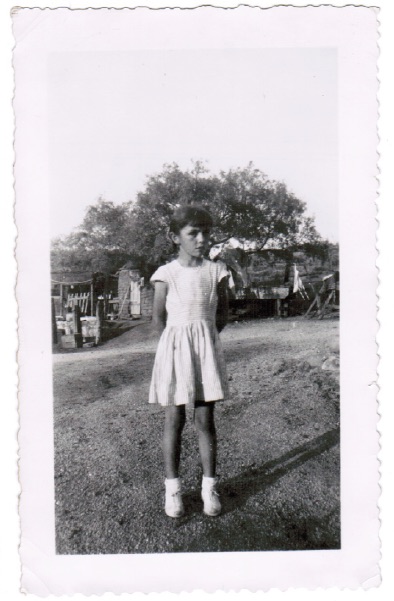
Click to enlargeLee, circa 1950
Click to enlarge- Lee married Kenneth Deayon "Skip" Taylor (*21 Feb 1935 TX, +08.05.1991 Oracle AZ). Skip's family lived in Phoenix but had leased a farm in the Tubac area where he was working for the summer. They met at Kinsley's Ranch in Santa Cruz County AZ, which was a favorite hangout of the younger people in the area, particularly in the summers. Kinsley's had a nice swimming pool. During that summer Skip had also found work as an "extra" during the filming of the movie "Oklahoma".
Following high school Skip enrolled at Arizona Normal School in Tempe, now Arizona State University. In January 1955 Skip then entered the U.S. Navy with a four year commmitment. Skip and Lee were married ten months later on 4 November 1955 in the Baptist Church in Nogales AZ. Skip was on home leave. They first lived in Corpus Christi, Texas, then Mt. View, California. He was later stationed in Oak Harbor, Washington for most of his service.
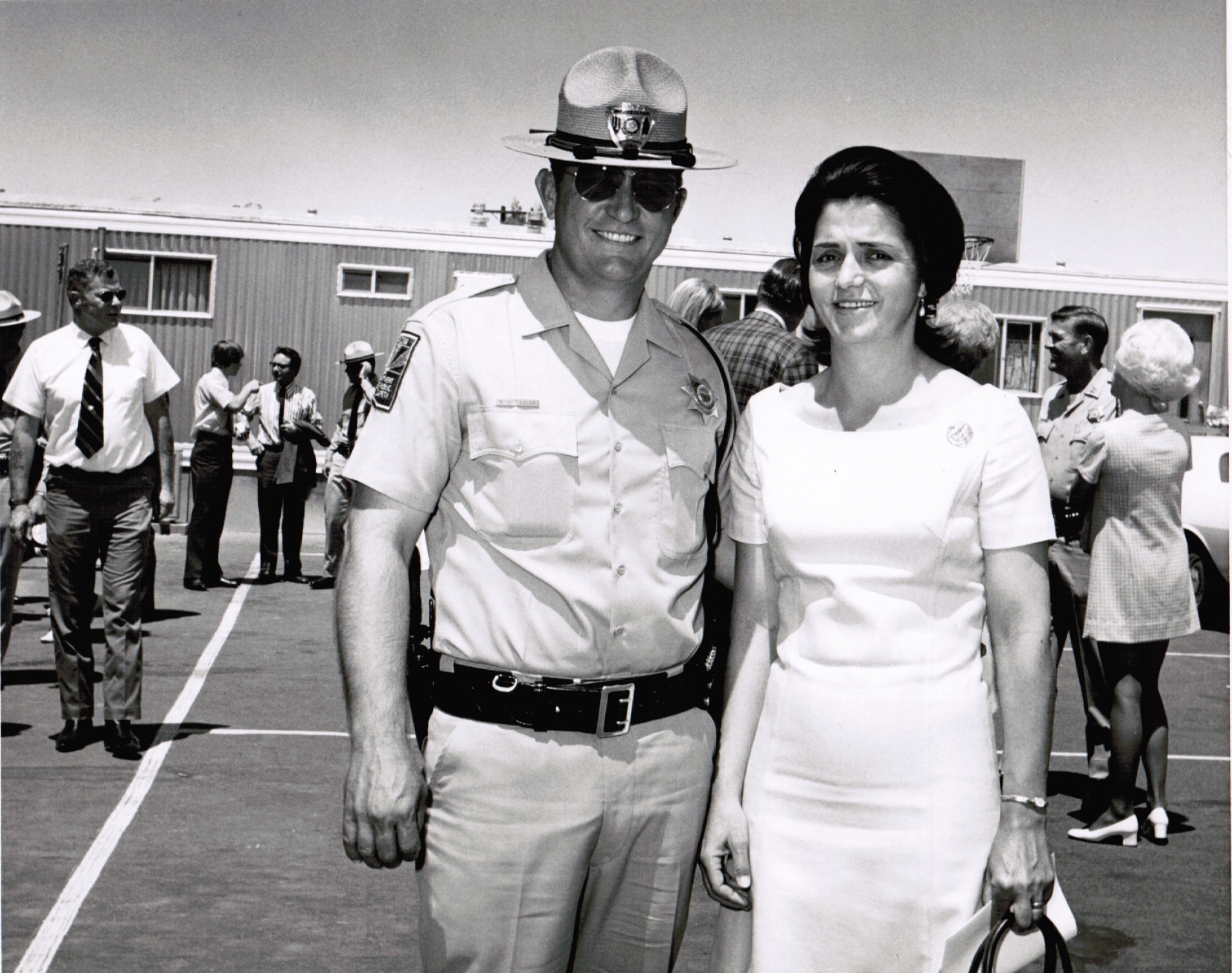
After his discharge from the Navy Skip enrolled at the University of Arizona in Tucson, graduating in 1961. He went to law school for a year but decided he was not interested in being a lawyer. He took courses at the Univerity in criminal justice which he found very interesting. Following university he worked for Valley National Bank in Phoenix, then went into police work. Initially he did undercover work for the police department in Phoenix. The rest of his career was as a patrolman with the Arizona Highway Patrol. They lived in Oracle AZ for many years. Skip retired in 1986. He passed away five years later. 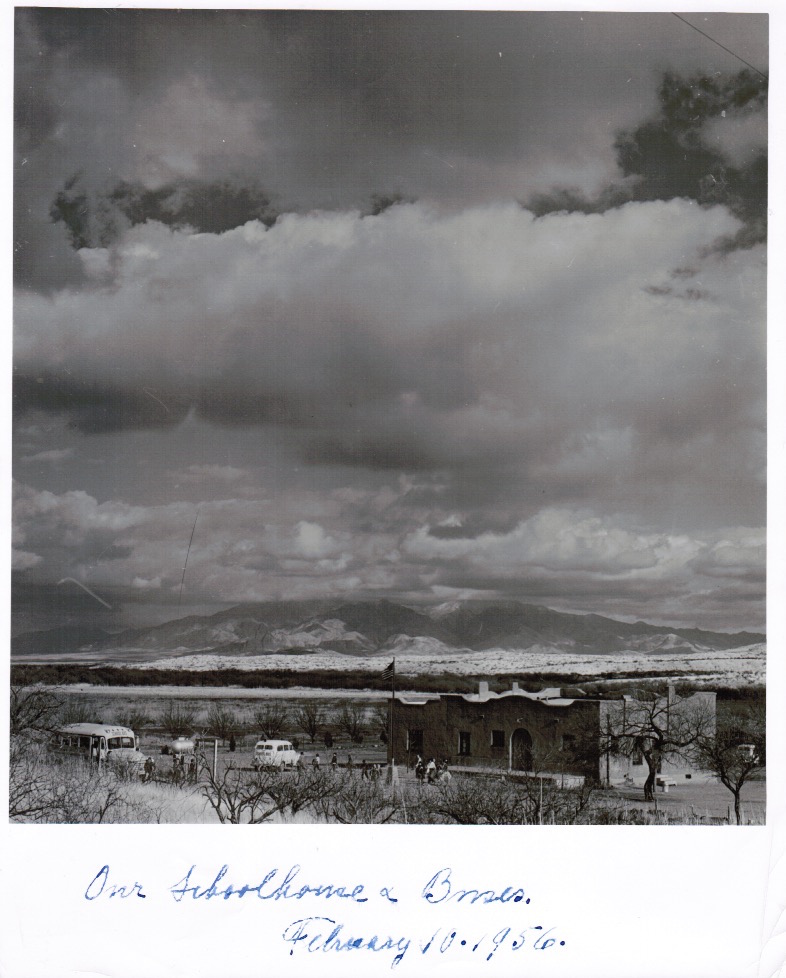
The Sopori School
10 miles west of Amado
on Arivaca Road
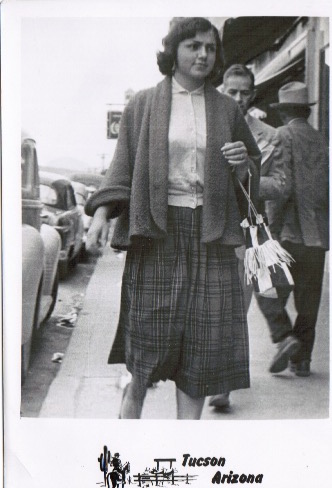
Click to enlargeLee Bell, Congress Street,
Tucson AZ circa 1954
Click to enlargeSkip and Lee Bell Taylor
Skip's earning of his sergeants stripes,
Phoenix, circa 1971
Click to enlarge
- Children: (4)
- 4.1.....Kim Denise Taylor (*1958 Oak Harbor WA, +2019)
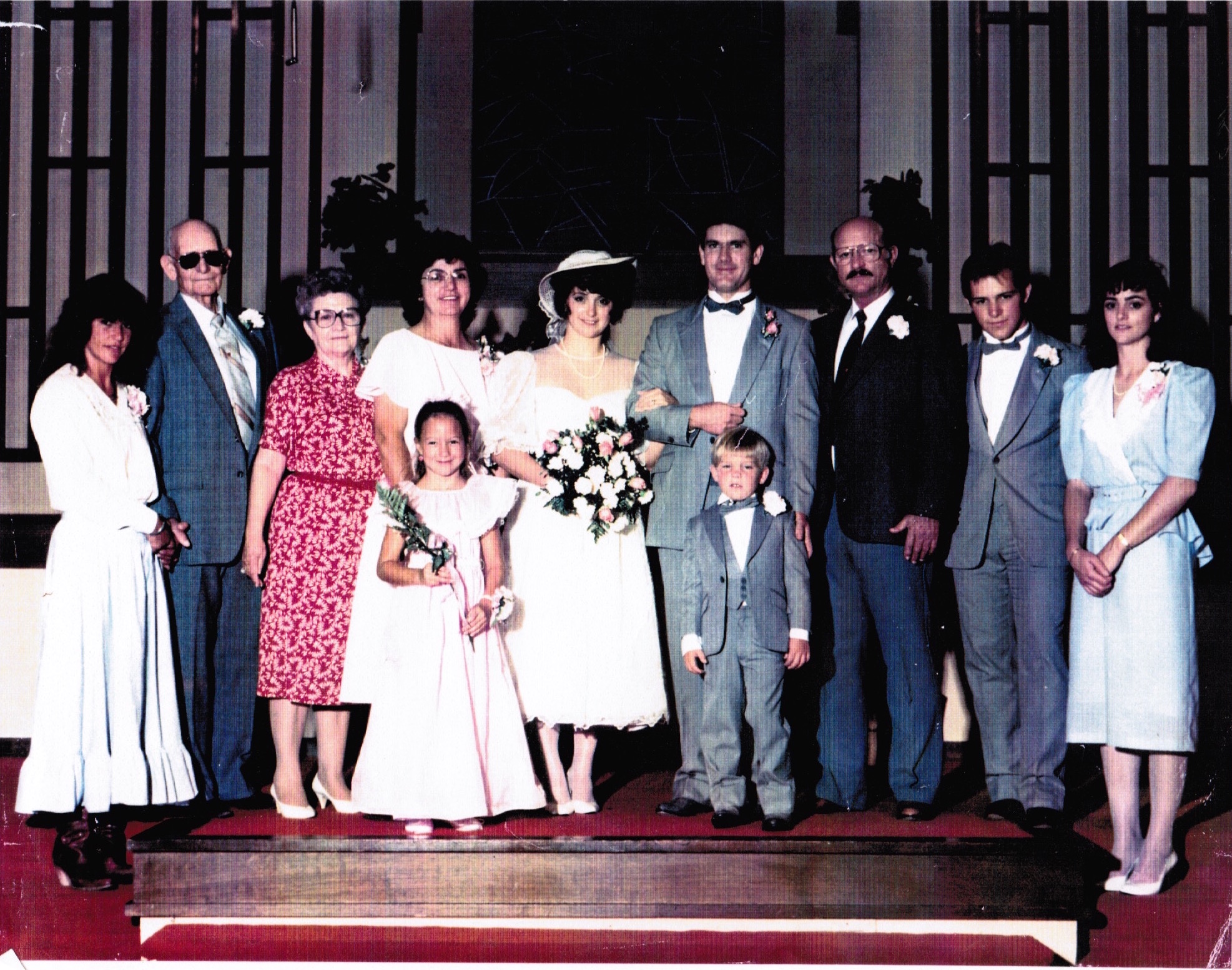
The Wedding of Kim and Steve Freeze
From L-R: Kena, Tex, Carrie and Lee Taylor, Kim and Steve Freeze, Ken, K.J. and Kelly Taylor. In front: Carrie and Clark Freeze
Click to enlarge
- Kim and Steven Freeze married....... Steven manages a pecan business, including processing the products and operating a retail store.
- Children: (2)
- 2.1.....Carrie Lee Freeze (*1979 Tucson AZ)
- Carrie Lee and Anthony Haile (*? ?) were married ..... in ..... She works in a dental office in Tucson.
- Children: (3)
- 3.1.....Cash Haile (*2009 Yuma AZ)
- 3.2.....Corbin Haile (*2011 Yuma AZ)
- 3.3.....Clark Haile (*2013 Tularosa NM)
- 2.2.....Michael Clark Freeze (*1981 ??)
- 4.2.....Kena Lee Taylor (*1960 Nogales AZ, +August 2021 Oracle AZ)
- Kena first married Steven Williams. Later she married Kent Bowman. She has children from each marriage. Kena has a hobby of bead work. She is artisticly talented.
- Children: (3)
- From the marriage with Steven Williams:
- 3.1.....Jesse Dayon Williams (*about 1980)
- From the marriage with Kent Bowman:
- 3.2.....Billie Jo Bowman (*1982 Tucson AZ)
- Billie Jo and Jesse Guilen married. The met when they were both in the U.S. Navy. Presently they live in Minnesota. Billie Jo is a nurse. Jesse's experience is mostly in mechanical work.
- Children: (4)
- 4.1.....Charlie Guilen (*2006 Tucson AZ)
- 4.2.....Skeet Guilen (*)
- 4.3.....Jake Guilen (*)
- 4.4.....Wyatt Guilen (*)
- 3.3.....Leona Angel Bowman (*1984 ?)
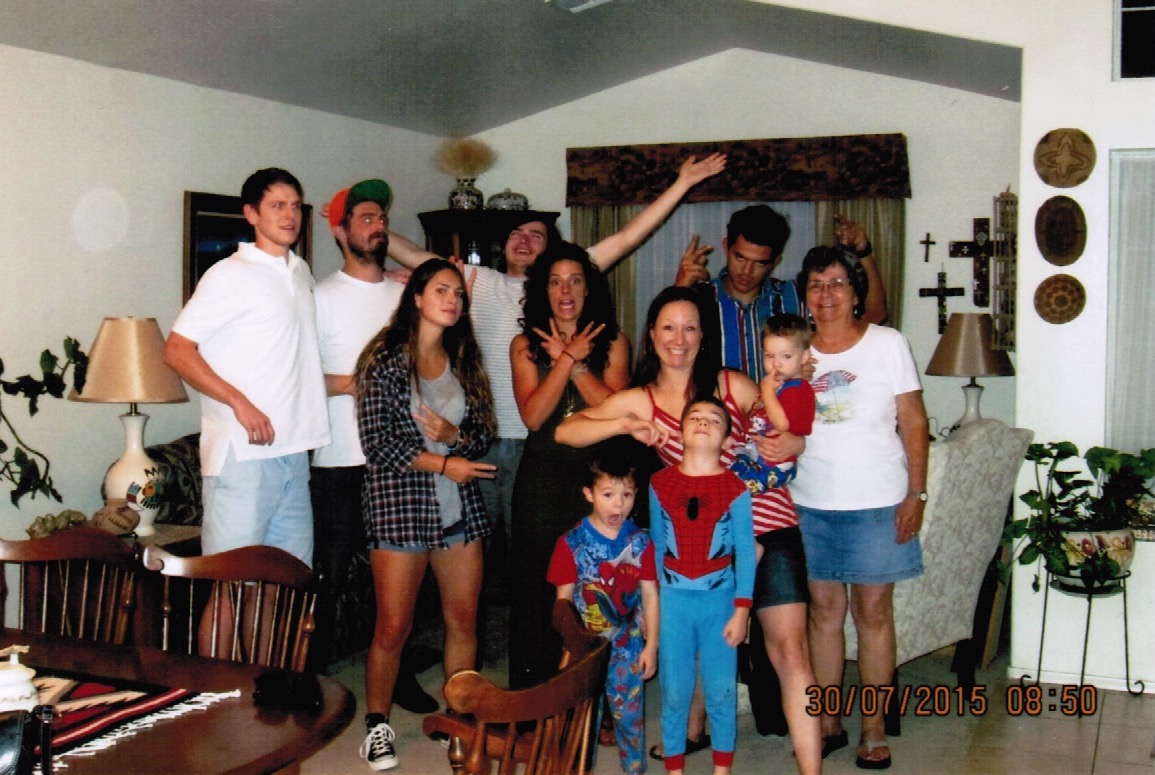
Family Get Together, July 2015
Back from left: Jake Moore, Taylor Norden, Matthew Hudson,
Will Taylor. Front from left: Alayna Hudson, Kate Taylor,
Carrie Freeze, Lee Bell. Kids: Corbin Haile, Cash Haile,
Clark Freeze
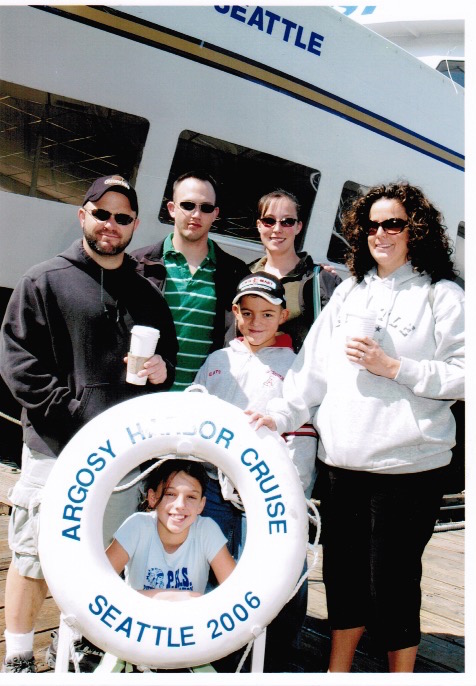
Click to enlargeFamily Boat Trip - Seattle WA
From L-R: Ken Taylor, Jesse and Jessica Williams,
Amy, Will and Kaitlin Taylor
Click to enlarge
- 4.3.....Kelly Ann Taylor (*1962 Tucson AZ)
- Kelly first was wed to James Norden. Following their divorce she then married Carl Hudson (*). She and Carl live in Bourne TX (San Antonio) where Kelly works for a credit union. Kelly enjoys readin in a diversity of subjects.
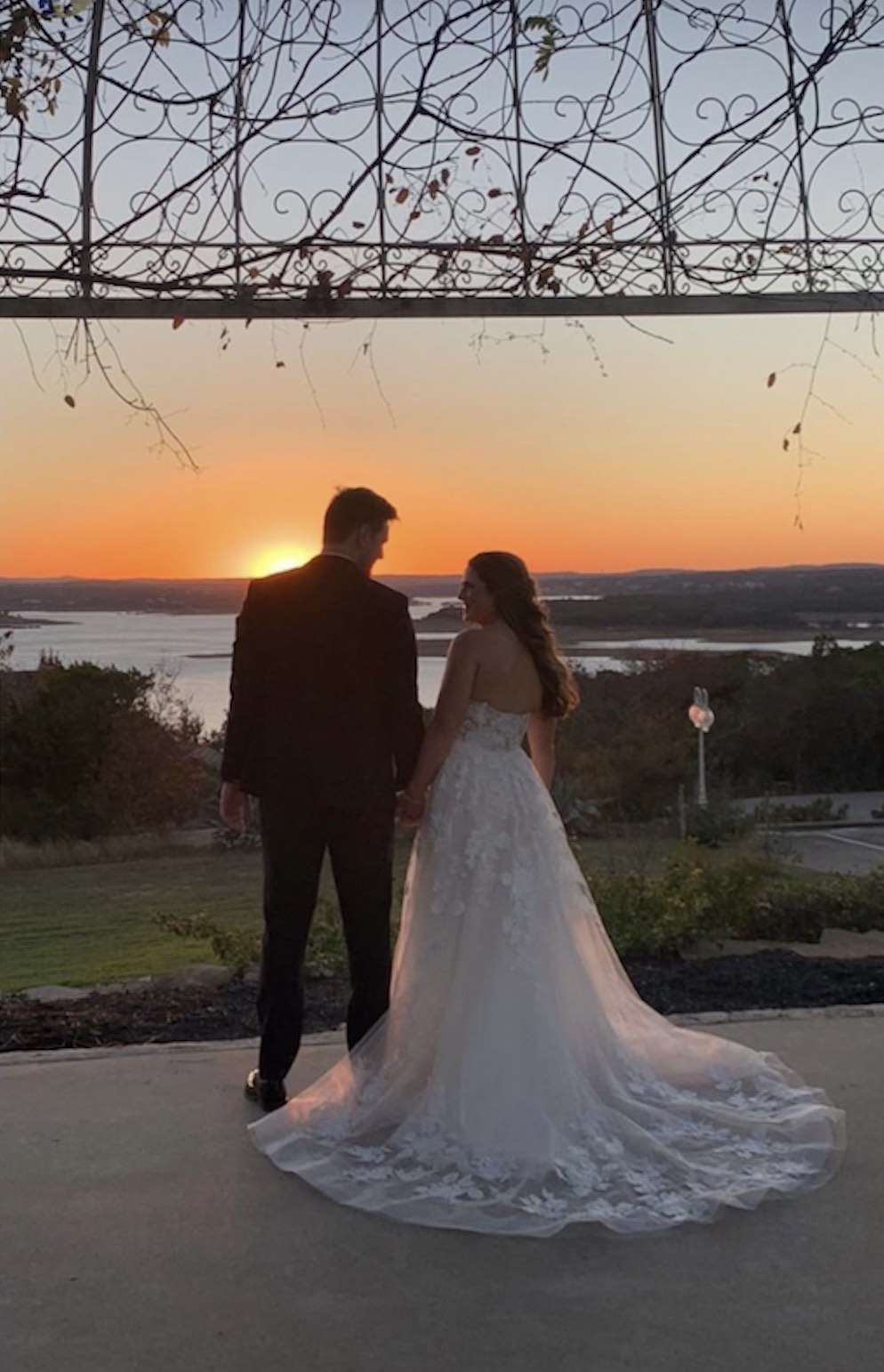
Alayna and Jake Williams (2022)
Click to enlarge
- Children: (3)
- Children with James Norden:
- 3.1.....Paul James "Taylor" Norden (*1980 San Diego CA)
- Children with Carl Hudson:
- 3.2.....Alayna Lee Hudson (*1996 Tucson AZ)
- Alayna has completed her studies at Baylor University in Waco TX. In 2022 she and Justin "Jake" Williams were married.
- 3.3.....Mathew Aiden Hudson (*1999 Tucson AZ)
- 4.4.....Kenneth James Taylor (*1970 Phoenix)
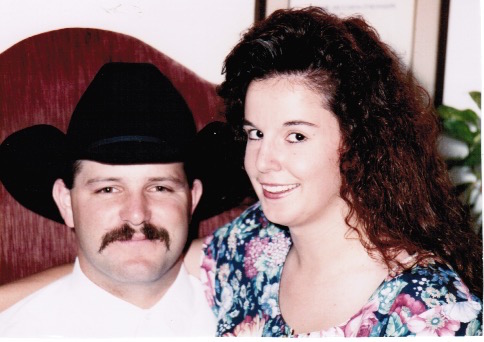
K.J. and Amy
Click to enlarge
- Kenneth James "K.J." and Amy Van Haren married. He entered the U.S. Navy after high school. Following his discharge he went to farrier school (where one learns to shoe horses), then worked in a copper mine. He then struck out on a new career path.
In his free time K.J. enjoys gunsmithing and making leather holsters. - Children: (2)
- 2.1.....Kaitlin Marie Taylor (*1985 Yuma AZ)
- 2.2.....Will James Taylor (*1986 ??)
- Kaitlin and her brother Will are both students at the University of Arizona in Tucson.
- Now CLICK to visit the Timeline for Paul Schömbs Schombs Bell
1930 was another eventful year for Paul. Early in January a friend (Maury Graham) died in a plane crash. Maury was flying the U.S. mail from Los Angeles to Salt Lake City. It is fairly certain that the plane was partly owned by Paul. Then the next month Paul was involved in a traffic accident in Pasadena. Paul was riding his motorcycle.
FOOTNOTES:
[1] Lee Bell Taylor (*1936)
[2] Lee Bell Taylor (*1936)
[3] Lee Bell Taylor (*1936)
[4] Lee Bell Taylor (*1936)
[5] Lee Bell Taylor (*1936)
[6] Lee Bell Taylor (*1936)
[7] Lee Bell Taylor (*1936)
- More conversations with Lee Bell Taylor
IF THE LINKS BELOW DO NOT WORK FOR YOU, TRY USING A DIFFERENT BROWSER. AS AN EXAMPLE, SOME VERSIONS OF SAFARI MAY NOT WORK. IF SO, USE FIREFOX OR CHROME AND THEY PROBABLY WILL. For familysearch.org you will also need to first log in (or create a free account).
1925 Marriage Ancestry.com
1930 U.S. Census Bell - Familysearch.org
1930 U.S. Census Hackett - Familysearch.org
1940 U.S. Census Familysearch.org